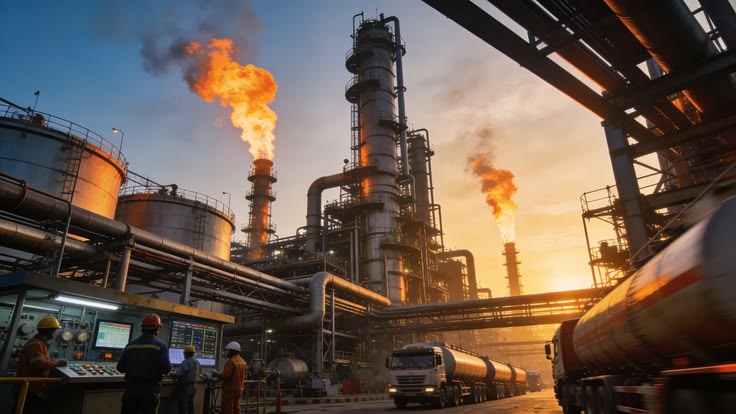
For industrial buyers, distributors, and importers, navigating the Polish oil and gas market presents a complex landscape of challenges. Biggest challenges buying oil & gas in Poland range from supply chain disruptions and regulatory compliance to price volatility and quality assurance.
This article is intended for decision-makers responsible for bulk fuel procurement, storage, and distribution in Poland. It provides a detailed breakdown of common obstacles, explains why direct sourcing from U.S. refineries can simplify operations, and offers actionable strategies to mitigate risk, optimize costs, and ensure consistent supply.
Supplier Reliability: The Cornerstone of Secure Procurement
The Challenge
Supplier reliability remains a critical concern in Poland’s energy market. Common issues include:
- Non-verified sellers with limited or no actual supply capacity
- Delayed deliveries that disrupt industrial operations
- Substandard fuel quality impacting compliance and equipment performance
A single unreliable supplier can halt operations and cause significant financial loss.
Mitigation Strategies
- Direct Refinery Access: Buying directly from established U.S. or European refineries reduces dependency on intermediaries.
- Verification Protocols: Check supplier registration, licenses, and export documentation.
- Trade References: Examine supplier history and previous performance.
- Third-Party Inspection: Engage inspection agencies to validate quality and volume.
For detailed guidance on verified suppliers in Poland, see https://intergaz.pl/buy-crude-oil-in-poland-verified-suppliers-guide/.
Regulatory Compliance: Dual Focus on EU and U.S. Standards
The Challenge
Fuel imports to Poland must comply with overlapping regulatory frameworks:
- European Union Regulations:
- EN590 diesel and EN228 gasoline standards
- Environmental and safety compliance
- U.S. Export Compliance:
- Federal fuel export regulations
- Documentation accuracy for customs and banking
Failure to meet these standards can result in shipment rejection, fines, or operational delays.
Best Practices
- Maintain updated knowledge of EU and U.S. regulations.
- Ensure suppliers provide Certificates of Quality (COQ) and full compliance documentation.
- Establish internal auditing and verification processes for incoming shipments.
Relevant regulatory updates can be monitored at the International Energy Agency — https://www.iea.org.
Price Volatility and Benchmarking
The Challenge
Global fuel prices fluctuate rapidly, affecting both short-term and long-term procurement strategies. Drivers of volatility include:
- Crude oil price swings (Brent, WTI)
- Geopolitical events affecting supply chains
- Seasonal demand fluctuations
Risk Management Strategies
- Benchmark Pricing: Tie contracts to Platts, Brent, or regional indices for transparency.
- Hedging Instruments: Financial tools such as futures contracts or price collars mitigate exposure.
- Contract Flexibility: Include fixed-price and floating-price clauses depending on operational needs.
For global market trend analysis, see OilPrice — https://oilprice.com.
Logistics and Delivery Realities
Common Obstacles
Polish buyers face several logistical pain points:
- Port congestion at Baltic terminals
- Delayed customs clearance
- Limited storage infrastructure for bulk fuels
- Inefficient coordination between shipping, suppliers, and terminals
Mitigation Measures
- Pre-book Shipping: Secure slots in advance to reduce delays.
- Buffer Storage: Maintain reserves to cover short-term supply interruptions.
- Integrated Planning: Coordinate logistics across suppliers, carriers, and terminal operators.
Optimizing logistics ensures operational continuity and prevents costly downtime. Services related to logistics and fuel handling are available at https://intergaz.pl/services/.
Quality Assurance: Preventing Operational Failures
The Challenge
Fuel quality directly impacts equipment longevity and regulatory compliance. Common issues include:
- Contaminated or off-spec fuel
- Incorrect grade or type delivered
- Poor storage conditions affecting product stability
Best Practices
- Pre-shipment quality inspection by certified agencies
- Review Certificates of Quality for every batch
- On-arrival testing before storage and usage
Implementing rigorous quality assurance reduces downtime, compliance risk, and operational disruptions.
Contract Structures: Navigating Risk and Responsibility
FOB vs CIF Contracts
Contract terms define the risk distribution between buyer and seller:
- FOB (Free on Board): Buyer assumes responsibility for transport and insurance after the shipment leaves the port. Offers flexibility but requires robust logistics management.
- CIF (Cost, Insurance, Freight): Supplier handles transport and insurance, reducing operational burden but generally at higher cost.
Contracts should specify:
- Pricing mechanisms
- Delivery schedules
- Quality and compliance requirements
- Payment terms (LCs, bank guarantees)
Proper contract structuring mitigates financial, operational, and quality risks.
Market Structure and Supply Reliability
Challenges in Poland
- Heavy reliance on imports, especially from Russia and the Middle East
- Limited domestic refining capacity
- Political and geopolitical risks affecting global supply
Strategies for Buyers
- Supplier Diversification: Engage multiple verified suppliers to reduce dependency.
- Long-Term Contracts: Secure supply and price stability over time.
- Monitoring & Reporting: Regular audits and KPIs ensure compliance and performance.
For regional supply and policy insights, see U.S. Energy Information Administration — https://www.eia.gov.
Future Trends and Outlook
Increased Direct Procurement
Polish buyers are increasingly interested in direct refinery contracts to secure quality, transparency, and reliability.
Expansion of U.S. Fuel Exports
The U.S. continues to grow its refining and export capabilities, providing high-quality products under flexible contractual terms.
Transition to Clean Energy
While renewable fuels gain momentum, conventional oil and gas will remain crucial for industrial and transport needs, maintaining demand for secure bulk fuel procurement. For macro-level forecasts, see OPEC — https://www.opec.org.
Step-by-Step Buyer Recommendations
- Define Specifications: Fuel type, volume, and quality standards.
- Verify Suppliers: Prefer direct refineries or licensed distributors.
- Conduct Due Diligence: Check documentation, licenses, and financial stability.
- Negotiate Contracts: Ensure terms cover delivery, payment, pricing, and quality.
- Plan Logistics: Include shipping, storage, and terminal coordination.
- Inspect Quality: Utilize third-party verification and Certificates of Quality.
- Ensure Compliance: EU and U.S. regulations must be met.
- Mitigate Risks: Diversify suppliers, employ financial safeguards, and monitor KPIs.
For support with verified suppliers in Poland, visit https://intergaz.pl/contact-us/.
Conclusion
Understanding the biggest challenges buying oil & gas in Poland is essential for industrial buyers and importers seeking operational stability, compliance, and cost optimization. From supplier verification and contract management to logistics, regulatory adherence, and market monitoring, each stage presents unique obstacles.
Direct procurement from verified U.S. refineries, coupled with structured contracts and robust quality control, addresses these pain points effectively. By following best practices and leveraging strategic insights, Polish buyers can secure a reliable, cost-efficient, and compliant supply chain to meet industrial and commercial demands.
This analysis provides a comprehensive roadmap for navigating Poland’s oil and gas market, ensuring informed decision-making and sustainable supply chain management.