

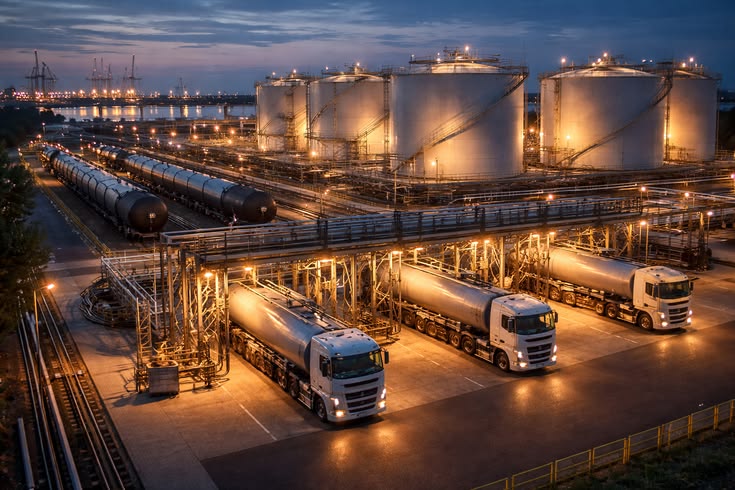
Global Oil Exporters play a critical role in maintaining the stability of international energy markets. Crude oil remains one of the world’s most traded commodities, supporting transportation systems, industrial production, power generation, and petrochemical manufacturing across every major economy. Understanding where crude oil originates and how it moves through international supply chains is essential for energy traders, procurement managers, refinery operators, and institutional buyers.
The distribution of global crude oil exports is heavily influenced by production capacity, infrastructure development, geopolitical considerations, and transportation networks. While some regions dominate global supply volumes, others serve specialized markets through unique crude grades and export routes. This guide examines the major oil-exporting regions, the infrastructure that supports global petroleum trade, and the market intelligence factors that influence supply availability.
What Defines Major Oil Exporters?
Not all producing nations export crude oil at the same scale. Several factors determine whether a country becomes a significant participant in global petroleum trade.
Oil Exporters and Production Capacity
Production volume remains one of the most important indicators of export potential. Countries with substantial reserves and strong upstream operations are better positioned to supply both domestic and international markets.
Large producers often invest heavily in exploration, field development, and extraction technologies that support long-term production growth and export reliability.
Export Infrastructure
Infrastructure plays a vital role in determining export competitiveness. Major exporters typically maintain:
- Pipeline systems
- Storage terminals
- Tank farms
- Marine loading facilities
- Deep-water ports
Without efficient infrastructure, production capacity alone cannot support large-scale international exports.
Refining and Downstream Integration
Many leading exporting countries operate integrated petroleum systems that connect upstream production with refining and distribution operations.
Buyers evaluating petroleum opportunities often review allocation programs and supply frameworks such as:
https://intergaz.pl/crude-oil-supply-allocation-for-verified-buyers/
Integrated systems can improve supply flexibility and support long-term procurement strategies.
Compliance and Market Access
International petroleum markets increasingly require suppliers and exporters to meet strict compliance standards, quality requirements, and documentation procedures.
Countries with transparent regulatory frameworks often attract greater international trade participation.
Middle East Oil Exporters
The Middle East remains one of the most influential petroleum-exporting regions in the world.
Leading Oil Exporters in the Middle East
Countries such as Saudi Arabia, Iraq, Kuwait, and the United Arab Emirates possess some of the largest proven crude oil reserves globally.
The region’s production scale, combined with relatively low extraction costs, has helped establish its position as a cornerstone of global energy supply.
Strategic Export Advantages
Middle Eastern exporters benefit from:
- Extensive production capacity
- Modern export terminals
- Strategic geographic positioning
- Direct access to global shipping routes
These advantages enable the region to supply crude oil to major consuming markets across Asia, Europe, and Africa.
North American Oil Exporters
North America has become increasingly important within global petroleum markets.
Oil Exporters in North America
The United States and Canada are among the region’s most significant crude oil producers and exporters.
Technological advancements in shale development and unconventional resource extraction have expanded production capabilities and strengthened export potential.
Infrastructure Strength
North America benefits from:
- Extensive pipeline networks
- Large storage hubs
- Advanced refining capacity
- Sophisticated logistics systems
These assets contribute to export efficiency and supply reliability.
Russia and Eurasian Oil Exporters
Russia continues to play a major role in global petroleum trade.
Oil Exporters Across Eurasia
Russia remains one of the largest crude oil exporters globally, supplying markets throughout Europe, Asia, and other international destinations.
The broader Eurasian region also contributes meaningful volumes through established transportation corridors and export infrastructure.
Pipeline and Terminal Networks
Extensive pipeline systems connect production regions to export terminals, allowing crude oil to reach international buyers efficiently.
These transportation assets remain critical to regional export performance.
African Oil Exporters
Africa contains several significant petroleum-producing nations that support global crude oil supply.
Oil Exporters Across Africa
Major African exporters include:
- Nigeria
- Angola
- Algeria
- Libya
These countries contribute substantial export volumes to international markets and supply a variety of crude grades.
Export Market Significance
Many refiners value African crude because of its specific refining characteristics and compatibility with various processing systems.
African exports continue to serve both established and emerging energy markets.
Asia-Pacific Oil Exporters
Although often associated with energy consumption, the Asia-Pacific region also contains important oil-exporting countries.
Emerging Oil Exporters in Asia-Pacific
Countries such as Malaysia and Australia contribute to regional petroleum supply through established production and export systems.
Their strategic location supports trade throughout Asia and the broader Pacific region.
Regional Supply Growth
Continued infrastructure investment and production development may strengthen the region’s role in future global energy markets.
How Global Oil Export Supply Chains Operate
Exporting crude oil involves a highly coordinated supply chain that connects production fields with international buyers.
Production, Storage, and Export
The supply chain typically follows several key stages:
Production → Processing → Storage → Export Terminal → Shipping → Delivery
Each stage requires operational coordination and infrastructure support.
Storage and Tank Farms
Storage facilities play an essential role in balancing production schedules with export commitments.
Tank farms help exporters:
- Manage inventory
- Coordinate vessel loading
- Maintain supply continuity
- Reduce logistical disruptions
FOB and CIF Export Structures
International petroleum trade commonly relies on FOB and CIF delivery arrangements.
Under FOB agreements, buyers assume responsibility once cargo is loaded at the export terminal.
Under CIF agreements, sellers arrange transportation and insurance through the destination port.
Examples of these supply structures can be found at:
https://intergaz.pl/en590-diesel-supplier-fob-poland/
https://intergaz.pl/en590-diesel-supply-fob-poland-cif-international-delivery-2/
https://intergaz.pl/gasoil-10ppm-supply-fob-poland-cif-international-delivery/
https://intergaz.pl/jet-fuel-a1-bulk-supply-cif-global-markets/
Procurement Considerations When Working with Oil Exporters
Organizations purchasing crude oil must evaluate exporters carefully before entering commercial agreements.
Supplier Verification
Verification procedures often include:
- Corporate registration reviews
- Export capability assessments
- Infrastructure evaluations
- Compliance documentation reviews
These steps help reduce procurement risk and support informed decision-making.
ICPO and Contract Structure
Most international petroleum transactions involve:
- International Corporate Purchase Orders (ICPOs)
- Product specifications
- Delivery schedules
- Inspection procedures
- Payment mechanisms
Clear documentation establishes the framework for successful transactions.
Allocation Systems
Many exporters distribute available production through allocation systems designed to prioritize qualified buyers and manage supply commitments effectively.
Additional industry resources can be found at:
https://intergaz.pl/contact-us/
Market Intelligence Affecting Oil Exporters
Global petroleum markets are influenced by numerous economic, political, and operational factors.
OPEC Influence on Oil Exporters
Production decisions made by OPEC continue to shape global supply balances and pricing trends.
Energy professionals frequently monitor:
for market forecasts and production updates.
Geopolitical Developments
Political events can significantly affect export availability and transportation routes.
Examples include:
- Sanctions
- Trade restrictions
- Regional conflicts
- Regulatory changes
- Export controls
These developments often influence both pricing and supply reliability.
Supply and Pricing Dynamics
Market participants routinely analyze industry data from:
to understand production trends, inventory levels, and global market balances.
Conclusion
Global Oil Exporters form the backbone of international petroleum trade, supplying crude oil to refineries, industrial consumers, and energy markets worldwide. From the Middle East and North America to Africa, Eurasia, and Asia-Pacific, each region contributes unique production capabilities and infrastructure strengths that support global energy security.
For procurement managers, traders, refiners, and institutional buyers, understanding the regional distribution of oil exports is essential for evaluating supply opportunities and managing procurement risks. As market conditions continue to evolve, informed decision-making supported by supplier verification, infrastructure analysis, and market intelligence will remain critical to successful participation in global petroleum markets.